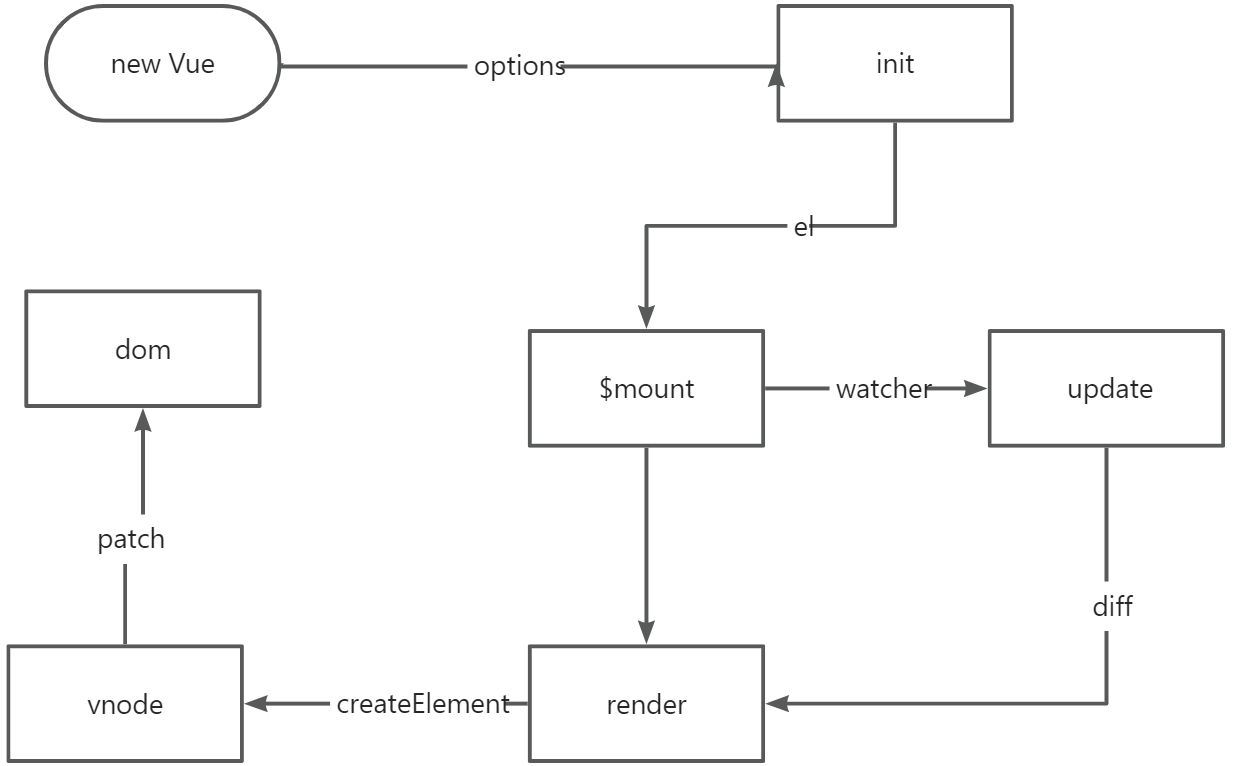
生命周期
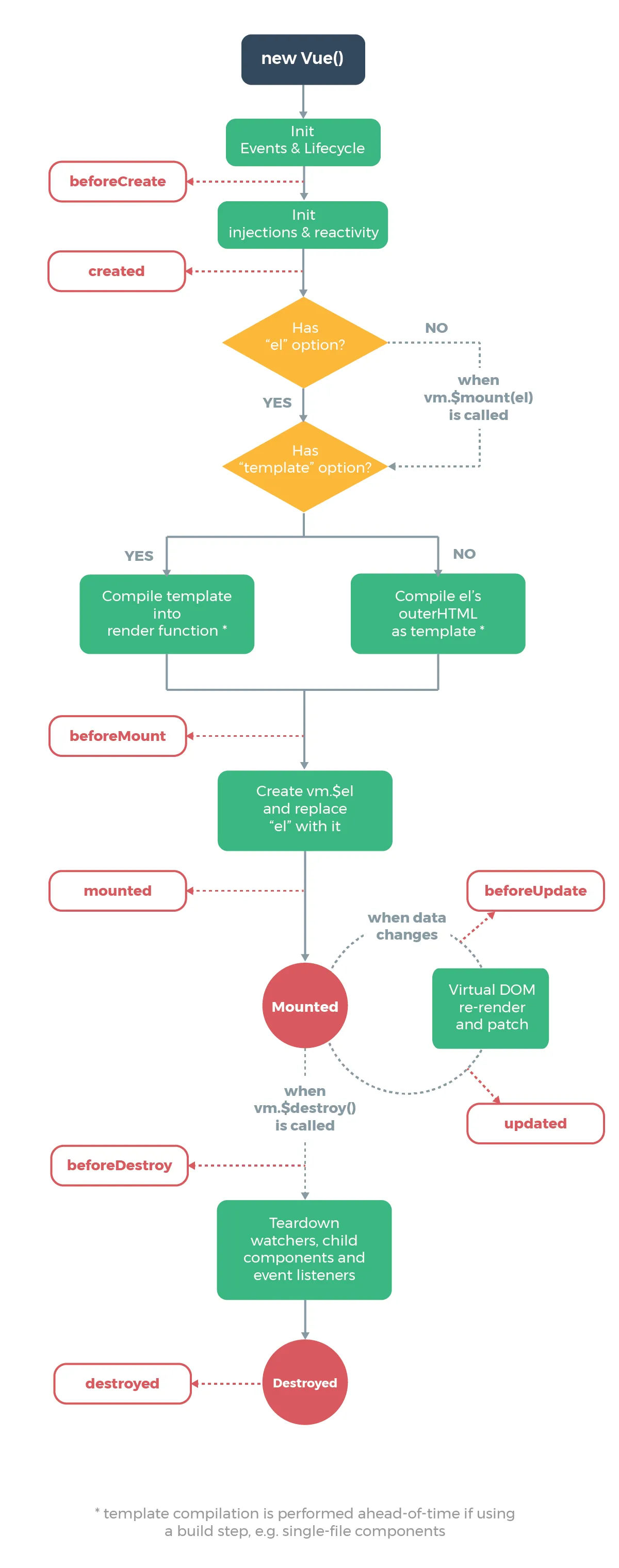
new Vue 做了什么?
Vue
src/core/instance/index
function Vue(options) {
  if (__DEV__ && !(this instanceof Vue)) {
    warn('Vue is a constructor and should be called with the `new` keyword')
  }
  this._init(options)
}
- 调用
_init
_init
src/core/instance/init
Vue.prototype._init = function (options?: Record<string, any>) {
    const vm: Component = this
    // a uid
    vm._uid = uid++

    let startTag, endTag
    /* istanbul ignore if */
    if (__DEV__ && config.performance && mark) {
      startTag = `vue-perf-start:${vm._uid}`
      endTag = `vue-perf-end:${vm._uid}`
      mark(startTag)
    }

    // a flag to mark this as a Vue instance without having to do instanceof
    // check
    vm._isVue = true
    // avoid instances from being observed
    vm.__v_skip = true
    // effect scope
    vm._scope = new EffectScope(true /* detached */)
    vm._scope._vm = true
    // merge options
    if (options && options._isComponent) {
      // optimize internal component instantiation
      // since dynamic options merging is pretty slow, and none of the
      // internal component options needs special treatment.
      initInternalComponent(vm, options as any)
    } else {
      vm.$options = mergeOptions(
        resolveConstructorOptions(vm.constructor as any),
        options || {},
        vm
      )
    }
    /* istanbul ignore else */
    if (__DEV__) {
      initProxy(vm)
    } else {
      vm._renderProxy = vm
    }
    // expose real self
    vm._self = vm
    initLifecycle(vm)
    initEvents(vm)
    initRender(vm)
    callHook(vm, 'beforeCreate', undefined, false /* setContext */)
    initInjections(vm) // resolve injections before data/props
    initState(vm)
    initProvide(vm) // resolve provide after data/props
    callHook(vm, 'created')

    /* istanbul ignore if */
    if (__DEV__ && config.performance && mark) {
      vm._name = formatComponentName(vm, false)
      mark(endTag)
      measure(`vue ${vm._name} init`, startTag, endTag)
    }

    if (vm.$options.el) {
      vm.$mount(vm.$options.el)
    }
  }
- 添加属性
- 合并参数
mergeOptions - 初始化生命周期
initLifecycle - 初始化事件中心
initEvents - 初始化渲染
initRender - 调用生命周期钩子
beforeCreate - 初始化注入
initInjections - 初始化 props、setup、methods、data、computed、watch
initState - 初始化依赖
initProvide - 调用生命周期钩子
created - 挂载到dom上
vm.$mount(vm.$options.el)
为什么传 el 自动挂载的原因:
if (vm.$options.el) {
    vm.$mount(vm.$options.el)
}
总结
- 合并参数
- 初始化一系列内容:生命周期、事件中心、渲染、依赖注入、页面状态
- 调用了生命周期钩子beforeCreate和created
- 挂载dom
$mount 做了什么?
$mount
src/platforms/web/runtime-with-compiler
const mount = Vue.prototype.$mount
Vue.prototype.$mount = function (
  el?: string | Element,
  hydrating?: boolean
): Component {
  el = el && query(el)

  /* istanbul ignore if */
  if (el === document.body || el === document.documentElement) {
    __DEV__ &&
      warn(
        `Do not mount Vue to <html> or <body> - mount to normal elements instead.`
      )
    return this
  }

  const options = this.$options
  // resolve template/el and convert to render function
  if (!options.render) {
    let template = options.template
    if (template) {
      if (typeof template === 'string') {
        if (template.charAt(0) === '#') {
          template = idToTemplate(template)
          /* istanbul ignore if */
          if (__DEV__ && !template) {
            warn(
              `Template element not found or is empty: ${options.template}`,
              this
            )
          }
        }
      } else if (template.nodeType) {
        template = template.innerHTML
      } else {
        if (__DEV__) {
          warn('invalid template option:' + template, this)
        }
        return this
      }
    } else if (el) {
      // @ts-expect-error
      template = getOuterHTML(el)
    }
    if (template) {
      /* istanbul ignore if */
      if (__DEV__ && config.performance && mark) {
        mark('compile')
      }

      const { render, staticRenderFns } = compileToFunctions(
        template,
        {
          outputSourceRange: __DEV__,
          shouldDecodeNewlines,
          shouldDecodeNewlinesForHref,
          delimiters: options.delimiters,
          comments: options.comments
        },
        this
      )
      options.render = render
      options.staticRenderFns = staticRenderFns

      /* istanbul ignore if */
      if (__DEV__ && config.performance && mark) {
        mark('compile end')
        measure(`vue ${this._name} compile`, 'compile', 'compile end')
      }
    }
  }
  return mount.call(this, el, hydrating)
}
- 缓存了原型上的
$mount方法 - 获取挂载的dom
el = el && query(el) - 限制挂载根节点
body和html - 如果没有
render函数,将template和el字符串通过compileToFunctions转化为render函数 - 调用原型上的
$mount
src/platform/web/runtime/index原型上的$mount
// public mount method
Vue.prototype.$mount = function (
  el?: string | Element,
  hydrating?: boolean
): Component {
  el = el && inBrowser ? query(el) : undefined
  return mountComponent(this, el, hydrating)
}
- 获取
eldom - 调用
mountComponent
src/core/instance/lifecycle
export function mountComponent(
  vm: Component,
  el: Element | null | undefined,
  hydrating?: boolean
): Component {
  vm.$el = el
  if (!vm.$options.render) {
    // @ts-expect-error invalid type
    vm.$options.render = createEmptyVNode
    if (__DEV__) {
      /* istanbul ignore if */
      if (
        (vm.$options.template && vm.$options.template.charAt(0) !== '#') ||
        vm.$options.el ||
        el
      ) {
        warn(
          'You are using the runtime-only build of Vue where the template ' +
            'compiler is not available. Either pre-compile the templates into ' +
            'render functions, or use the compiler-included build.',
          vm
        )
      } else {
        warn(
          'Failed to mount component: template or render function not defined.',
          vm
        )
      }
    }
  }
  callHook(vm, 'beforeMount')

  let updateComponent
  /* istanbul ignore if */
  if (__DEV__ && config.performance && mark) {
    updateComponent = () => {
      const name = vm._name
      const id = vm._uid
      const startTag = `vue-perf-start:${id}`
      const endTag = `vue-perf-end:${id}`

      mark(startTag)
      const vnode = vm._render()
      mark(endTag)
      measure(`vue ${name} render`, startTag, endTag)

      mark(startTag)
      vm._update(vnode, hydrating)
      mark(endTag)
      measure(`vue ${name} patch`, startTag, endTag)
    }
  } else {
    updateComponent = () => {
      vm._update(vm._render(), hydrating)
    }
  }

  const watcherOptions: WatcherOptions = {
    before() {
      if (vm._isMounted && !vm._isDestroyed) {
        callHook(vm, 'beforeUpdate')
      }
    }
  }

  if (__DEV__) {
    watcherOptions.onTrack = e => callHook(vm, 'renderTracked', [e])
    watcherOptions.onTrigger = e => callHook(vm, 'renderTriggered', [e])
  }

  // we set this to vm._watcher inside the watcher's constructor
  // since the watcher's initial patch may call $forceUpdate (e.g. inside child
  // component's mounted hook), which relies on vm._watcher being already defined
  new Watcher(
    vm,
    updateComponent,
    noop,
    watcherOptions,
    true /* isRenderWatcher */
  )
  hydrating = false

  // flush buffer for flush: "pre" watchers queued in setup()
  const preWatchers = vm._preWatchers
  if (preWatchers) {
    for (let i = 0; i < preWatchers.length; i++) {
      preWatchers[i].run()
    }
  }

  // manually mounted instance, call mounted on self
  // mounted is called for render-created child components in its inserted hook
  if (vm.$vnode == null) {
    vm._isMounted = true
    callHook(vm, 'mounted')
  }
  return vm
}
- 判断
render没有则创建空的createEmptyVNode - 调用生命周期钩子
beforeMount - 实例化
watcher,执行updateComponentupdateComponent监听数据变化后执行,vm_update更新vm._render()获取到的vnodewatcherOptions监听数据变化后触发生命周期钩子beforeUpdate
- 调用生命周期钩子
mounted
总结
- 限制挂载的dom节点
- 如果没有
render函数的时候- 如果存在
template和el转换render函数 - 否则创建空的
createEmptyVNode
- 如果存在
- 调用生命周期钩子
beforeMount、mounted - 实例化
watcher,监听数据变化更改dom,初始化时直接触发updateComponent
模板编译做了什么?
通过上一步$mount知道,挂载之前如果没有render函数,会通过compileToFunctions将template转化为render函数
src/platforms/web/compiler/index
const { compile, compileToFunctions } = createCompiler(baseOptions)

export { compile, compileToFunctions }
createCompiler
src/compiler/index
// `createCompilerCreator` allows creating compilers that use alternative
// parser/optimizer/codegen, e.g the SSR optimizing compiler.
// Here we just export a default compiler using the default parts.
export const createCompiler = createCompilerCreator(function baseCompile(
  template: string,
  options: CompilerOptions
): CompiledResult {
  const ast = parse(template.trim(), options)
  if (options.optimize !== false) {
    optimize(ast, options)
  }
  const code = generate(ast, options)
  return {
    ast,
    render: code.render,
    staticRenderFns: code.staticRenderFns
  }
})
-
解析器
<font style="color:rgb(36, 41, 47);">parse:将template转化为ast - 优化器
optimize:优化ast,将所有静态节点和静态根节点打标记 - 生成器
generate:将ast转化为render函数
总结
将template转化为ast,优化ast后,再生成render函数
创建vnode做了什么?
_render
src/core/instance/render
Vue.prototype._render = function (): VNode {
  const vm: Component = this
  const { render, _parentVnode } = vm.$options

  if (_parentVnode && vm._isMounted) {
    vm.$scopedSlots = normalizeScopedSlots(
      vm.$parent!,
      _parentVnode.data!.scopedSlots,
      vm.$slots,
      vm.$scopedSlots
    )
    if (vm._slotsProxy) {
      syncSetupSlots(vm._slotsProxy, vm.$scopedSlots)
    }
  }

  // set parent vnode. this allows render functions to have access
  // to the data on the placeholder node.
  vm.$vnode = _parentVnode!
  // render self
  const prevInst = currentInstance
  const prevRenderInst = currentRenderingInstance
  let vnode
  try {
    setCurrentInstance(vm)
    currentRenderingInstance = vm
    vnode = render.call(vm._renderProxy, vm.$createElement)
  } catch (e: any) {
    handleError(e, vm, `render`)
    // return error render result,
    // or previous vnode to prevent render error causing blank component
    /* istanbul ignore else */
    if (__DEV__ && vm.$options.renderError) {
      try {
        vnode = vm.$options.renderError.call(
          vm._renderProxy,
          vm.$createElement,
          e
        )
      } catch (e: any) {
        handleError(e, vm, `renderError`)
        vnode = vm._vnode
      }
    } else {
      vnode = vm._vnode
    }
  } finally {
    currentRenderingInstance = prevRenderInst
    setCurrentInstance(prevInst)
  }
  // if the returned array contains only a single node, allow it
  if (isArray(vnode) && vnode.length === 1) {
    vnode = vnode[0]
  }
  // return empty vnode in case the render function errored out
  if (!(vnode instanceof VNode)) {
    if (__DEV__ && isArray(vnode)) {
      warn(
        'Multiple root nodes returned from render function. Render function ' +
          'should return a single root node.',
        vm
      )
    }
    vnode = createEmptyVNode()
  }
  // set parent
  vnode.parent = _parentVnode
  return vnode
}
- 调用$createElement
vnode = render.call(vm._renderProxy, vm.$createElement)
createElement、_createElement
src/core/vdom/create-element
// wrapper function for providing a more flexible interface
// without getting yelled at by flow
export function createElement(
  context: Component,
  tag: any,
  data: any,
  children: any,
  normalizationType: any,
  alwaysNormalize: boolean
): VNode | Array<VNode> {
  if (isArray(data) || isPrimitive(data)) {
    normalizationType = children
    children = data
    data = undefined
  }
  if (isTrue(alwaysNormalize)) {
    normalizationType = ALWAYS_NORMALIZE
  }
  return _createElement(context, tag, data, children, normalizationType)
}
- 处理参数
- 调用
_createElement
export function _createElement(
  context: Component,
  tag?: string | Component | Function | Object,
  data?: VNodeData,
  children?: any,
  normalizationType?: number
): VNode | Array<VNode> {
  if (isDef(data) && isDef((data as any).__ob__)) {
    __DEV__ &&
      warn(
        `Avoid using observed data object as vnode data: ${JSON.stringify(
          data
        )}\n` + 'Always create fresh vnode data objects in each render!',
        context
      )
    return createEmptyVNode()
  }
  // object syntax in v-bind
  if (isDef(data) && isDef(data.is)) {
    tag = data.is
  }
  if (!tag) {
    // in case of component :is set to falsy value
    return createEmptyVNode()
  }
  // warn against non-primitive key
  if (__DEV__ && isDef(data) && isDef(data.key) && !isPrimitive(data.key)) {
    warn(
      'Avoid using non-primitive value as key, ' +
        'use string/number value instead.',
      context
    )
  }
  // support single function children as default scoped slot
  if (isArray(children) && isFunction(children[0])) {
    data = data || {}
    data.scopedSlots = { default: children[0] }
    children.length = 0
  }
  if (normalizationType === ALWAYS_NORMALIZE) {
    children = normalizeChildren(children)
  } else if (normalizationType === SIMPLE_NORMALIZE) {
    children = simpleNormalizeChildren(children)
  }
  let vnode, ns
  if (typeof tag === 'string') {
    let Ctor
    ns = (context.$vnode && context.$vnode.ns) || config.getTagNamespace(tag)
    if (config.isReservedTag(tag)) {
      // platform built-in elements
      if (
        __DEV__ &&
        isDef(data) &&
        isDef(data.nativeOn) &&
        data.tag !== 'component'
      ) {
        warn(
          `The .native modifier for v-on is only valid on components but it was used on <${tag}>.`,
          context
        )
      }
      vnode = new VNode(
        config.parsePlatformTagName(tag),
        data,
        children,
        undefined,
        undefined,
        context
      )
    } else if (
      (!data || !data.pre) &&
      isDef((Ctor = resolveAsset(context.$options, 'components', tag)))
    ) {
      // component
      vnode = createComponent(Ctor, data, context, children, tag)
    } else {
      // unknown or unlisted namespaced elements
      // check at runtime because it may get assigned a namespace when its
      // parent normalizes children
      vnode = new VNode(tag, data, children, undefined, undefined, context)
    }
  } else {
    // direct component options / constructor
    vnode = createComponent(tag as any, data, context, children)
  }
  if (isArray(vnode)) {
    return vnode
  } else if (isDef(vnode)) {
    if (isDef(ns)) applyNS(vnode, ns)
    if (isDef(data)) registerDeepBindings(data)
    return vnode
  } else {
    return createEmptyVNode()
  }
}
- 判断
data,是null、undefined则创建空 vnodecreateEmptyVNode - 判断
tag是string``typeof tag === 'string'- 平台内置节点
config.isReservedTag(tag) - 已注册的组件节点
(!data || !data.pre) &&isDef((Ctor = resolveAsset(context.$options, 'components', tag)) - 否则创建一个未知的标签节点
- 平台内置节点
- 否则创建一组件节点
所有的 vnode 都是通过new VNode创建的,包括createComponent内部也是通过new VNode实现的。
resolveAsset
src/core/util/options
/**
 * Resolve an asset.
 * This function is used because child instances need access
 * to assets defined in its ancestor chain.
 */
export function resolveAsset(
  options: Record<string, any>,
  type: string,
  id: string,
  warnMissing?: boolean
): any {
  /* istanbul ignore if */
  if (typeof id !== 'string') {
    return
  }
  const assets = options[type]
  // check local registration variations first
  if (hasOwn(assets, id)) return assets[id]
  const camelizedId = camelize(id)
  if (hasOwn(assets, camelizedId)) return assets[camelizedId]
  const PascalCaseId = capitalize(camelizedId)
  if (hasOwn(assets, PascalCaseId)) return assets[PascalCaseId]
  // fallback to prototype chain
  const res = assets[id] || assets[camelizedId] || assets[PascalCaseId]
  if (__DEV__ && warnMissing && !res) {
    warn('Failed to resolve ' + type.slice(0, -1) + ': ' + id)
  }
  return res
}
camelize:lg-test=>lgTestcapitalize:test=>Test
createComponent
src/core/vdom/create-component
export function createComponent(
  Ctor: typeof Component | Function | ComponentOptions | void,
  data: VNodeData | undefined,
  context: Component,
  children?: Array<VNode>,
  tag?: string
): VNode | Array<VNode> | void {
  if (isUndef(Ctor)) {
    return
  }

  // ...

  // install component management hooks onto the placeholder node
  installComponentHooks(data)

  // return a placeholder vnode
  // @ts-expect-error
  const name = getComponentName(Ctor.options) || tag
  const vnode = new VNode(
    // @ts-expect-error
    `vue-component-${Ctor.cid}${name ? `-${name}` : ''}`,
    data,
    undefined,
    undefined,
    undefined,
    context,
    // @ts-expect-error
    { Ctor, propsData, listeners, tag, children },
    asyncFactory
  )

  return vnode
}
- 初始化钩子函数
installComponentHooks - 创建
vnodenew VNode
VNode
src/core/vdom/vnode
export default class VNode {
  tag?: string
  data: VNodeData | undefined
  children?: Array<VNode> | null
  text?: string
  elm: Node | undefined
  ns?: string
  context?: Component // rendered in this component's scope
  key: string | number | undefined
  componentOptions?: VNodeComponentOptions
  componentInstance?: Component // component instance
  parent: VNode | undefined | null // component placeholder node

  // strictly internal
  raw: boolean // contains raw HTML? (server only)
  isStatic: boolean // hoisted static node
  isRootInsert: boolean // necessary for enter transition check
  isComment: boolean // empty comment placeholder?
  isCloned: boolean // is a cloned node?
  isOnce: boolean // is a v-once node?
  asyncFactory?: Function // async component factory function
  asyncMeta: Object | void
  isAsyncPlaceholder: boolean
  ssrContext?: Object | void
  fnContext: Component | void // real context vm for functional nodes
  fnOptions?: ComponentOptions | null // for SSR caching
  devtoolsMeta?: Object | null // used to store functional render context for devtools
  fnScopeId?: string | null // functional scope id support
  isComponentRootElement?: boolean | null // for SSR directives

  constructor(
    tag?: string,
    data?: VNodeData,
    children?: Array<VNode> | null,
    text?: string,
    elm?: Node,
    context?: Component,
    componentOptions?: VNodeComponentOptions,
    asyncFactory?: Function
  ) {
    this.tag = tag
    this.data = data
    this.children = children
    this.text = text
    this.elm = elm
    this.ns = undefined
    this.context = context
    this.fnContext = undefined
    this.fnOptions = undefined
    this.fnScopeId = undefined
    this.key = data && data.key
    this.componentOptions = componentOptions
    this.componentInstance = undefined
    this.parent = undefined
    this.raw = false
    this.isStatic = false
    this.isRootInsert = true
    this.isComment = false
    this.isCloned = false
    this.isOnce = false
    this.asyncFactory = asyncFactory
    this.asyncMeta = undefined
    this.isAsyncPlaceholder = false
  }

  // DEPRECATED: alias for componentInstance for backwards compat.
  /* istanbul ignore next */
  get child(): Component | void {
    return this.componentInstance
  }
}
通过不同参数实例化VNode类,创建vnode实例对象
总结
// h 指的就是createElement
import { h } from 'vue'
// render 函数
function render() {
  return h('div', { title: '' }, 'hello world')
}
通过createElement创建vnode,判断tag是否是内置节点、自定义节点、标签节点。基于节点属性调用VNode类,创建vnode实例对象
vnode转化dom做了什么?
nodeType
文档节点(document):9
元素节点(element):1
属性节点(attr):2
文本节点(text):3
文档类型节点(DocumentType):10
注释节点(Comment):8
文档片断节点(DocumentFragment):11
_update
src/core/instance/lifecycle
Vue.prototype._update = function (vnode: VNode, hydrating?: boolean) {
    const vm: Component = this
    const prevEl = vm.$el
    const prevVnode = vm._vnode
    const restoreActiveInstance = setActiveInstance(vm)
    vm._vnode = vnode
    // Vue.prototype.__patch__ is injected in entry points
    // based on the rendering backend used.
    if (!prevVnode) {
      // initial render
      vm.$el = vm.__patch__(vm.$el, vnode, hydrating, false /* removeOnly */)
    } else {
      // updates
      vm.$el = vm.__patch__(prevVnode, vnode)
    }
    restoreActiveInstance()
    // update __vue__ reference
    if (prevEl) {
      prevEl.__vue__ = null
    }
    if (vm.$el) {
      vm.$el.__vue__ = vm
    }
    // if parent is an HOC, update its $el as well
    let wrapper: Component | undefined = vm
    while (
      wrapper &&
      wrapper.$vnode &&
      wrapper.$parent &&
      wrapper.$vnode === wrapper.$parent._vnode
    ) {
      wrapper.$parent.$el = wrapper.$el
      wrapper = wrapper.$parent
    }
    // updated hook is called by the scheduler to ensure that children are
    // updated in a parent's updated hook.
  }
- 根据
prevVnode判断是否存在,调用vm.__patch__- 不存在,传入
$el和vnode - 存在,传入
prevVnode和vnode
- 不存在,传入
createPatchFunction
src/core/vdom/patch
patch
export function createPatchFunction(backend) {
  let i, j
  const cbs: any = {}

  const { modules, nodeOps } = backend

  for (i = 0; i < hooks.length; ++i) {
    cbs[hooks[i]] = []
    for (j = 0; j < modules.length; ++j) {
      if (isDef(modules[j][hooks[i]])) {
        cbs[hooks[i]].push(modules[j][hooks[i]])
      }
    }
  }

  //...

  return function patch(oldVnode, vnode, hydrating, removeOnly) {
    if (isUndef(vnode)) {
      if (isDef(oldVnode)) invokeDestroyHook(oldVnode)
      return
    }

    let isInitialPatch = false
    const insertedVnodeQueue: any[] = []

    if (isUndef(oldVnode)) {
      // empty mount (likely as component), create new root element
      isInitialPatch = true
      createElm(vnode, insertedVnodeQueue)
    } else {
      const isRealElement = isDef(oldVnode.nodeType)
      if (!isRealElement && sameVnode(oldVnode, vnode)) {
        // patch existing root node
        patchVnode(oldVnode, vnode, insertedVnodeQueue, null, null, removeOnly)
      } else {
        if (isRealElement) {
          // mounting to a real element
          // check if this is server-rendered content and if we can perform
          // a successful hydration.
          if (oldVnode.nodeType === 1 && oldVnode.hasAttribute(SSR_ATTR)) {
            oldVnode.removeAttribute(SSR_ATTR)
            hydrating = true
          }
          if (isTrue(hydrating)) {
            if (hydrate(oldVnode, vnode, insertedVnodeQueue)) {
              invokeInsertHook(vnode, insertedVnodeQueue, true)
              return oldVnode
            } else if (__DEV__) {
              warn(
                'The client-side rendered virtual DOM tree is not matching ' +
                  'server-rendered content. This is likely caused by incorrect ' +
                  'HTML markup, for example nesting block-level elements inside ' +
                  '<p>, or missing <tbody>. Bailing hydration and performing ' +
                  'full client-side render.'
              )
            }
          }
          // either not server-rendered, or hydration failed.
          // create an empty node and replace it
          oldVnode = emptyNodeAt(oldVnode)
        }

        // replacing existing element
        const oldElm = oldVnode.elm
        const parentElm = nodeOps.parentNode(oldElm)

        // create new node
        createElm(
          vnode,
          insertedVnodeQueue,
          // extremely rare edge case: do not insert if old element is in a
          // leaving transition. Only happens when combining transition +
          // keep-alive + HOCs. (#4590)
          oldElm._leaveCb ? null : parentElm,
          nodeOps.nextSibling(oldElm)
        )

        // update parent placeholder node element, recursively
        if (isDef(vnode.parent)) {
          let ancestor = vnode.parent
          const patchable = isPatchable(vnode)
          while (ancestor) {
            for (let i = 0; i < cbs.destroy.length; ++i) {
              cbs.destroy[i](ancestor)
            }
            ancestor.elm = vnode.elm
            if (patchable) {
              for (let i = 0; i < cbs.create.length; ++i) {
                cbs.create[i](emptyNode, ancestor)
              }
              // #6513
              // invoke insert hooks that may have been merged by create hooks.
              // e.g. for directives that uses the "inserted" hook.
              const insert = ancestor.data.hook.insert
              if (insert.merged) {
                // start at index 1 to avoid re-invoking component mounted hook
                // clone insert hooks to avoid being mutated during iteration.
                // e.g. for customed directives under transition group.
                const cloned = insert.fns.slice(1)
                for (let i = 0; i < cloned.length; i++) {
                  cloned[i]()
                }
              }
            } else {
              registerRef(ancestor)
            }
            ancestor = ancestor.parent
          }
        }

        // destroy old node
        if (isDef(parentElm)) {
          removeVnodes([oldVnode], 0, 0)
        } else if (isDef(oldVnode.tag)) {
          invokeDestroyHook(oldVnode)
        }
      }
    }

    invokeInsertHook(vnode, insertedVnodeQueue, isInitialPatch)
    return vnode.elm
  }
}
createPatchFunction内部定义了一系列的辅助方法,最终返回了一个 patch 方法,这个方法就赋值给了 vm._update 函数里调用的 vm.__patch__。
-
判断是否存在
<font style="color:rgb(44, 62, 80);">oldVnode<font style="color:rgb(44, 62, 80);">isUndef(oldVnode)<font style="color:rgb(44, 62, 80);">oldVnode不存在。- 直接创建
vnode
- 直接创建
<font style="color:rgb(44, 62, 80);">oldVnode存在。判断oldVnode和vnode是否相同- 相同,递归对比子节点
- 不相同。创建
vnode,删除oldVnode
createElm
创建dom
function createElm(
    vnode,
    insertedVnodeQueue,
    parentElm?: any,
    refElm?: any,
    nested?: any,
    ownerArray?: any,
    index?: any
  ) {
    if (isDef(vnode.elm) && isDef(ownerArray)) {
      // This vnode was used in a previous render!
      // now it's used as a new node, overwriting its elm would cause
      // potential patch errors down the road when it's used as an insertion
      // reference node. Instead, we clone the node on-demand before creating
      // associated DOM element for it.
      vnode = ownerArray[index] = cloneVNode(vnode)
    }

    vnode.isRootInsert = !nested // for transition enter check
    if (createComponent(vnode, insertedVnodeQueue, parentElm, refElm)) {
      return
    }

    const data = vnode.data
    const children = vnode.children
    const tag = vnode.tag
    if (isDef(tag)) {
      if (__DEV__) {
        if (data && data.pre) {
          creatingElmInVPre++
        }
        if (isUnknownElement(vnode, creatingElmInVPre)) {
          warn(
            'Unknown custom element: <' +
              tag +
              '> - did you ' +
              'register the component correctly? For recursive components, ' +
              'make sure to provide the "name" option.',
            vnode.context
          )
        }
      }

      vnode.elm = vnode.ns
        ? nodeOps.createElementNS(vnode.ns, tag)
        : nodeOps.createElement(tag, vnode)
      setScope(vnode)

      createChildren(vnode, children, insertedVnodeQueue)
      if (isDef(data)) {
        invokeCreateHooks(vnode, insertedVnodeQueue)
      }
      insert(parentElm, vnode.elm, refElm)

      if (__DEV__ && data && data.pre) {
        creatingElmInVPre--
      }
    } else if (isTrue(vnode.isComment)) {
      vnode.elm = nodeOps.createComment(vnode.text)
      insert(parentElm, vnode.elm, refElm)
    } else {
      vnode.elm = nodeOps.createTextNode(vnode.text)
      insert(parentElm, vnode.elm, refElm)
    }
  }
sameVnode
对比vnode
function sameVnode(a, b) {
  return (
    a.key === b.key &&
    a.asyncFactory === b.asyncFactory &&
    ((a.tag === b.tag &&
      a.isComment === b.isComment &&
      isDef(a.data) === isDef(b.data) &&
      sameInputType(a, b)) ||
      (isTrue(a.isAsyncPlaceholder) && isUndef(b.asyncFactory.error)))
  )
}
patchVnode
递归对比子节点
 function patchVnode(
    oldVnode,
    vnode,
    insertedVnodeQueue,
    ownerArray,
    index,
    removeOnly?: any
  ) {
    if (oldVnode === vnode) {
      return
    }

    if (isDef(vnode.elm) && isDef(ownerArray)) {
      // clone reused vnode
      vnode = ownerArray[index] = cloneVNode(vnode)
    }

    const elm = (vnode.elm = oldVnode.elm)

    if (isTrue(oldVnode.isAsyncPlaceholder)) {
      if (isDef(vnode.asyncFactory.resolved)) {
        hydrate(oldVnode.elm, vnode, insertedVnodeQueue)
      } else {
        vnode.isAsyncPlaceholder = true
      }
      return
    }

    // reuse element for static trees.
    // note we only do this if the vnode is cloned -
    // if the new node is not cloned it means the render functions have been
    // reset by the hot-reload-api and we need to do a proper re-render.
    if (
      isTrue(vnode.isStatic) &&
      isTrue(oldVnode.isStatic) &&
      vnode.key === oldVnode.key &&
      (isTrue(vnode.isCloned) || isTrue(vnode.isOnce))
    ) {
      vnode.componentInstance = oldVnode.componentInstance
      return
    }

    let i
    const data = vnode.data
    if (isDef(data) && isDef((i = data.hook)) && isDef((i = i.prepatch))) {
      i(oldVnode, vnode)
    }

    const oldCh = oldVnode.children
    const ch = vnode.children
    if (isDef(data) && isPatchable(vnode)) {
      for (i = 0; i < cbs.update.length; ++i) cbs.update[i](oldVnode, vnode)
      if (isDef((i = data.hook)) && isDef((i = i.update))) i(oldVnode, vnode)
    }
    if (isUndef(vnode.text)) {
      if (isDef(oldCh) && isDef(ch)) {
        if (oldCh !== ch)
          updateChildren(elm, oldCh, ch, insertedVnodeQueue, removeOnly)
      } else if (isDef(ch)) {
        if (__DEV__) {
          checkDuplicateKeys(ch)
        }
        if (isDef(oldVnode.text)) nodeOps.setTextContent(elm, '')
        addVnodes(elm, null, ch, 0, ch.length - 1, insertedVnodeQueue)
      } else if (isDef(oldCh)) {
        removeVnodes(oldCh, 0, oldCh.length - 1)
      } else if (isDef(oldVnode.text)) {
        nodeOps.setTextContent(elm, '')
      }
    } else if (oldVnode.text !== vnode.text) {
      nodeOps.setTextContent(elm, vnode.text)
    }
    if (isDef(data)) {
      if (isDef((i = data.hook)) && isDef((i = i.postpatch))) i(oldVnode, vnode)
    }
  }
- 先判断oldVnode和vnode,是否相等,如果相等,return
- 如果oldVnode是静态节点,并且vnode也是静态节点。并且,oldVnode.key 和 vnode.key相等。并且,vnode节点是克隆的或者是isOnce,那么直接返回,不需要对比了。
- 如果新的vnode,不是文本节点,那么:
- 如果oldVnode和vnode都存在children,那么:
- 如果2个children不相等,那么updateChildren
- 如果新的vnode存在children, 而老的oldVnode不存在children,那么:
- 如果老的oldVnode是文本节点,那么先清空真实dom中的内容,再把新的vnode的children添加到真实dom中。
- 如果老的oldVnode不是文本节点,那么直接添加到DOM中
- 如果新的vnode不存在children,而老的oldVnode中存在children,那么:直接把dom中的子节点清空
- 3.4 如果新的vnode,老的oldVnode都不存在children,但是老的oldVnode是文本节点,那么直接清空DOM内容
- 如果oldVnode和vnode都存在children,那么:
- 如果新的vnode是文本节点,老的oldVnode也是文本节点,那么:如果内容不相等,用新的内容覆盖老的内容
updateChildren
 function updateChildren(
    parentElm,
    oldCh,
    newCh,
    insertedVnodeQueue,
    removeOnly
  ) {
    let oldStartIdx = 0
    let newStartIdx = 0
    let oldEndIdx = oldCh.length - 1
    let oldStartVnode = oldCh[0]
    let oldEndVnode = oldCh[oldEndIdx]
    let newEndIdx = newCh.length - 1
    let newStartVnode = newCh[0]
    let newEndVnode = newCh[newEndIdx]
    let oldKeyToIdx, idxInOld, vnodeToMove, refElm

    // removeOnly is a special flag used only by <transition-group>
    // to ensure removed elements stay in correct relative positions
    // during leaving transitions
    const canMove = !removeOnly

    if (__DEV__) {
      checkDuplicateKeys(newCh)
    }

    while (oldStartIdx <= oldEndIdx && newStartIdx <= newEndIdx) {
      if (isUndef(oldStartVnode)) {
        oldStartVnode = oldCh[++oldStartIdx] // Vnode has been moved left
      } else if (isUndef(oldEndVnode)) {
        oldEndVnode = oldCh[--oldEndIdx]
      } else if (sameVnode(oldStartVnode, newStartVnode)) {
        patchVnode(
          oldStartVnode,
          newStartVnode,
          insertedVnodeQueue,
          newCh,
          newStartIdx
        )
        oldStartVnode = oldCh[++oldStartIdx]
        newStartVnode = newCh[++newStartIdx]
      } else if (sameVnode(oldEndVnode, newEndVnode)) {
        patchVnode(
          oldEndVnode,
          newEndVnode,
          insertedVnodeQueue,
          newCh,
          newEndIdx
        )
        oldEndVnode = oldCh[--oldEndIdx]
        newEndVnode = newCh[--newEndIdx]
      } else if (sameVnode(oldStartVnode, newEndVnode)) {
        // Vnode moved right
        patchVnode(
          oldStartVnode,
          newEndVnode,
          insertedVnodeQueue,
          newCh,
          newEndIdx
        )
        canMove &&
          nodeOps.insertBefore(
            parentElm,
            oldStartVnode.elm,
            nodeOps.nextSibling(oldEndVnode.elm)
          )
        oldStartVnode = oldCh[++oldStartIdx]
        newEndVnode = newCh[--newEndIdx]
      } else if (sameVnode(oldEndVnode, newStartVnode)) {
        // Vnode moved left
        patchVnode(
          oldEndVnode,
          newStartVnode,
          insertedVnodeQueue,
          newCh,
          newStartIdx
        )
        canMove &&
          nodeOps.insertBefore(parentElm, oldEndVnode.elm, oldStartVnode.elm)
        oldEndVnode = oldCh[--oldEndIdx]
        newStartVnode = newCh[++newStartIdx]
      } else {
        if (isUndef(oldKeyToIdx))
          oldKeyToIdx = createKeyToOldIdx(oldCh, oldStartIdx, oldEndIdx)
        idxInOld = isDef(newStartVnode.key)
          ? oldKeyToIdx[newStartVnode.key]
          : findIdxInOld(newStartVnode, oldCh, oldStartIdx, oldEndIdx)
        if (isUndef(idxInOld)) {
          // New element
          createElm(
            newStartVnode,
            insertedVnodeQueue,
            parentElm,
            oldStartVnode.elm,
            false,
            newCh,
            newStartIdx
          )
        } else {
          vnodeToMove = oldCh[idxInOld]
          if (sameVnode(vnodeToMove, newStartVnode)) {
            patchVnode(
              vnodeToMove,
              newStartVnode,
              insertedVnodeQueue,
              newCh,
              newStartIdx
            )
            oldCh[idxInOld] = undefined
            canMove &&
              nodeOps.insertBefore(
                parentElm,
                vnodeToMove.elm,
                oldStartVnode.elm
              )
          } else {
            // same key but different element. treat as new element
            createElm(
              newStartVnode,
              insertedVnodeQueue,
              parentElm,
              oldStartVnode.elm,
              false,
              newCh,
              newStartIdx
            )
          }
        }
        newStartVnode = newCh[++newStartIdx]
      }
    }
    if (oldStartIdx > oldEndIdx) {
      refElm = isUndef(newCh[newEndIdx + 1]) ? null : newCh[newEndIdx + 1].elm
      addVnodes(
        parentElm,
        refElm,
        newCh,
        newStartIdx,
        newEndIdx,
        insertedVnodeQueue
      )
    } else if (newStartIdx > newEndIdx) {
      removeVnodes(oldCh, oldStartIdx, oldEndIdx)
    }
  }
采用双指针的方法,进行头头,尾尾、头尾、尾头、乱序对比(基于key)
removeVnodes
删除dom
function removeVnodes(vnodes, startIdx, endIdx) {
    for (; startIdx <= endIdx; ++startIdx) {
      const ch = vnodes[startIdx]
      if (isDef(ch)) {
        if (isDef(ch.tag)) {
          removeAndInvokeRemoveHook(ch)
          invokeDestroyHook(ch)
        } else {
          // Text node
          removeNode(ch.elm)
        }
      }
    }
}
总结
<font style="color:rgb(44, 62, 80);">oldVnode不存在。直接创建vnode<font style="color:rgb(44, 62, 80);">oldVnode存在。判断oldVnode和vnode是否相同 * 相同,递归对比子节点,子节点对比采用双指针的方式。进行头头,尾尾、头尾、尾头、乱序对比(基于key) * 不相同。创建vnode,删除oldVnode
整理流程总结
从new Vue到dom渲染的流程: